
Media planning and buying for brands that intend to be famous

.png)




.svg)

Most media plans are written by the channel mix, not by the marketer
Here's how it usually goes. Last year's channels get pasted into this year's
spreadsheet. The percentages move a little. Whatever looked good last quarter
gets more, whatever didn't gets cut. Nobody asks what the plan is for.
That isn't a plan. It's an accounting exercise with a media agency attached.And the number everyone's optimising toward is lying.
You've watched a search line item get a raise for harvesting intent somebody else's campaign generated.A plan starts with a decision: are we creating demand or capturing it? Those need different channels, different budgets, different timelines and different proof. Get that decision wrong and everything after it is a rounding error on a mistake.
We plan first. Then we buy.
Every channel your audience actually uses. Not just the ones with a dashboard.
There are people who believe Meta is all there is, that print and TV and billboards are ruins from a golden age. Then you open GQ and Mercedes is still there. So is Adidas, so is Patek Philippe. Paul Smith is still in the FT.
Are they all stupid, or is there more than one kind of audience?
Meta, LinkedIn, TikTok, Reddit, Pinterest. Suitable for everything from cosmetics to sheet metal lasers, which is a sentence we can write because we've run both.
Google, Bing, Apple Search Ads. Brand defence, category capture and the long tail of people who already decided and are checking you exist.
Static and digital. 100+ DOOH screens across Riga for Motobuzz, measured against POS data and footfall — because "brand can't be measured" is a choice, not a fact.
CTV & TV
The closest you get to TV without the TV budget — and actual linear TV where the market justifies it. We ran 30s and 60s spots on Norwegian television for Kongsberg.
Print Ads
Premium press, trade and industry titles. Where the buying committee for a €1.2M machine actually reads.
Bought against audiences and context, not against whatever the exchange has spare. Native included.
How a based. media plan gets made
Five decisions, in this order. Reverse any two and you get the spreadsheet
you already have:
Demand creation and demand capture are different jobs.
Every channel gets a job written next to it. No job, no channel.
That's not a mix, it's a CV. We write the function beside each line — reach, frequency, capture, retention, proof — and anything we can't write a function for comes out of the plan, however comfortable it is.
Spend has an order. Spreading it evenly is how budgets disappear
without anything happening.
Below a certain weight, media does nothing at all. Not less. Nothing.
doesn't work at this budget and what to cut so it does. That's why our floor is €10,000 a month.
Proof gets designed before launch. Not reverse-engineered in Q3.
What our plans achieved
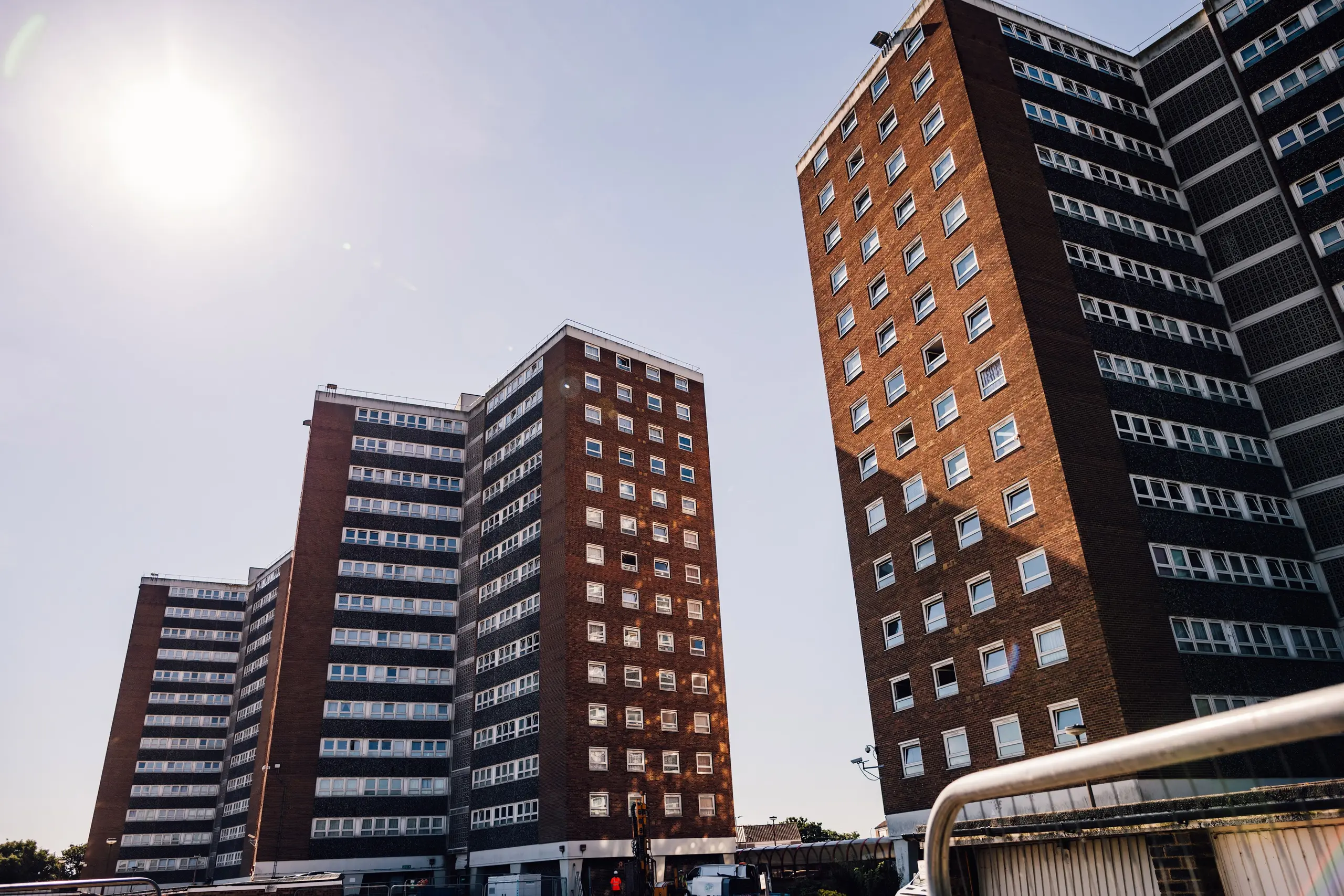
Kensa — making a heat pump brand famous during a heating crisis
Kensa is the UK's #1 ground source heat pump provider. Ground source is the most cost-effective and sustainable way to heat homes, schools, commercial buildings and whole neighbourhoods. We audited the strategy, positioning and spend, ran market and audience research, and rebuilt the media plan around separate messages for each of the four audiences who had to agree. We got CPL -30%, 2X the leads QoQ

Kongsberg Digital — $32M in PoC deals for a 200-year-old company selling the future
Kongsberg has been part of Norwegian industry since before ships were made of anything but wood. That legacy beats any competitor on trust and works against you the moment you try to sell digital twin software to drilling engineers, fleet managers and energy grid operators. The creative angle was space-optimism — Star Trek, not spreadsheets — which is how you get attention from a C-suite buried in identical vendor decks.
Campaigns led to $32M+ in proof-of-concept deals with Shell, BP, and Skanska. over two years. 852 qualified leads, 39% brand lift and 75% lower CPL.
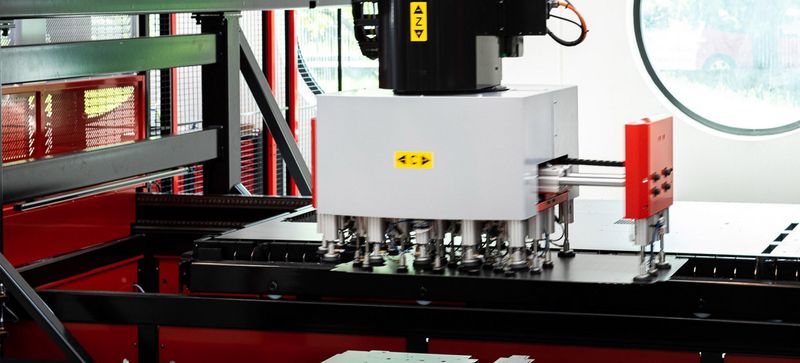
AMADA - 80 years of metal processing, and a campaign that said "Cut the Sh*t"
After 80 years in business, AMADA is in the top of metal processing equipment manufacturers in Europe, with a rich legacy, broad offering, loyal customers, and cutting-edge technology. They knew they needed better marketing than what AMADA had.
To retain its market position and grow the business we needed to find ways to stand out, announce the brand while respectfully acknowledging almost a century of AMADA’s history.
Don't just take our word for it

This is not for everyone
Below €10,000 a month in media, we'll tell you to spend it on one channel properly and come back. We're not going to take a retainer to spread €4k across five platforms so a report looks busy. We don't run media separately from creative unless you make us.
We can — but if the creative is limiting the media, we're going to say so out loud, in writing, probably more than once. We decline crypto, high-risk categories, and anything connected to the russian federation or its allies.
based. is boutique, expensive and opinionated. If you want an agency that agrees with the plan you already have, there are four hundred of them and they're cheaper.
Got questions?
We got answers
€10,000 a month. Below that you can't buy enough weight for brand effects to show up, and we'd be charging you to watch nothing happen..
Both, in that order. We won't take a buying-only brief against a plan we think is wrong — we'll tell you why first, and then you decide.
Paid social (Meta, LinkedIn, TikTok, Reddit, Pinterest), search (Google, Bing, Apple Search Ads), programmatic display and native, DOOH and static out-of-home, CTV, linear TV with some regional limits, and print.
We can. We don't recommend it. If you've got existing creative we'll run it — and we'll tell you when it's costing you media efficiency. System1 found dull creative needs 2.6x the media spend for the same market share growth. That's your money, not ours.
Monthly reporting, quarterly business reviews. Reach, frequency, attention and brand lift alongside the performance numbers — because a plan built on last-click will keep recommending last-click.
Brand lift studies, mental availability tracking, purchase consideration, media mix modelling where the spend justifies it. Defined before the campaign starts, not reverse-engineered after. You get proof your CFO can't argue with.
Crypto, high-risk categories, and anything connected to the russian federation or its allies.