
Distinctiveness vs Differentiation for Challenger Brands
You spent most of a year getting the house in order. New logo, locked to a grid. One colour, enforced like a dress code. A typeface nobody was allowed to break. A brand book with rules about clearspace that people actually obeyed. By the end you were consistent, recognisable, distinct in every room you walked into. You did, to the letter, exactly what the smartest people in marketing tell you to do. You built distinctive brand assets.
And you grew by roughly nothing. Because being recognisable had turned you into a tidy, credible, instantly identifiable alternative to the company everyone already buys from. Every time a buyer recognised you, the same buyer thought: right, them, the other one, the smaller one. Your lovely new consistency worked beautifully. It worked for the market leader.
The law is right, so let's not argue with it
Here's where I agree with the textbook, because the textbook is right. Byron Sharp and the Ehrenberg-Bass Institute have the data, and the data says brands grow by being distinctive rather than differentiated — instantly recognisable and easy to buy, not meaningfully better. Across thousands of brands and decades of it, they've shown that most of what companies call differentiation is invisible to customers who don't care about your brand a fraction as much as you do, and that the reliable growth lever is mental and physical availability. This isn't a fringe take. It's the most tested body of evidence in marketing. If you ever catch me arguing distinctiveness doesn't matter, stop reading — I've lost my mind.
So please don't throw out your brand book. Continue following the colours and fonts. All of that is correct. Just make sure your reference point makes sense.
Now look at whose brands built the data
The evidence came, overwhelmingly, from big, established, already-famous names. Coca-Cola. Companies with a century of head start and a share of mind you couldn't buy if you sold the building. For a brand like that, being the most recognisable thing in the category is the whole game, because recognisable plus everywhere plus already-trusted can't be beaten. For the leader, recognition is the win.
For you it's the ante. Andrew Tindall put it flatly, after watching the two biggest names in effectiveness fight it out on a Cannes stage: you can't out-recognise the market leader, because the leader is already more recognisable and always will be. Recognition gets you dealt into the hand. It doesn't win it. And there's a nastier catch underneath. The cleaner and more recognisable you make yourself as "the credible alternative," the harder you remind the whole market that there's a default — and that the default isn't you. Compete on recognisability and you're playing the one game the incumbent cannot lose.
What wins the hand is a reason
Not recognition. A reason to be chosen. Ritson, arguing the other corner of that same stage, is right that real differentiation is rare, and right that a brand which genuinely owns one should defend it to the death. Volvo owns safety. That's not a distinctive asset, it's a reason. It has survived decades because it answers the only question a buyer actually asks, which is never "who are you" but "why you and not them."
And here's the part the giants can't teach you, because they've never once had to know it. For a challenger, the reason is almost never a feature — features get matched by Tuesday. The reason is a stance the leader is too big to take, a specialism it's too broad to own, an enemy it won't name, a customer it treats as a rounding error. Those are differences you can hold precisely because you're small. Your size — the thing you've been quietly apologising for — is the only reason you're allowed to say the sharp thing the market leader's legal team would kill on sight.
Finding it isn't a brainstorm. It's a search for where the incumbent structurally can't follow. Ask what the biggest player in your category would never say out loud because it would offend half its customers — and say that. Ask which slice of the market it serves badly because serving them well isn't worth its while — and serve them obsessively. Ask what it's too invested in the old way to admit — and admit it first, in public. The reason is almost always sitting in the one spot the incumbent's size forbids it to stand.
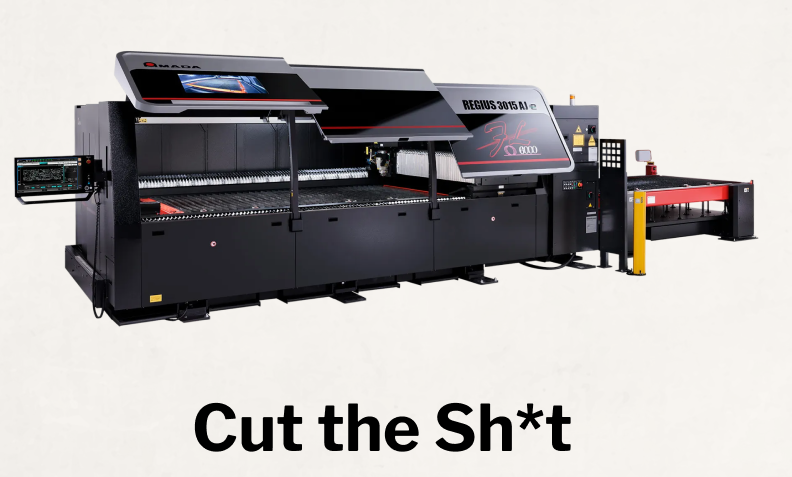
This is the part that sounds like a risk until you watch it work. A sheet-metal laser-cutter's campaign called "Cut the Sh*t" isn't a distinctive asset — it's a stance, a refusal to talk like every cautious engineering brand in the category, aimed at buyers bored to death of being sold to gently. A competitor could copy the colour overnight. It could never copy the nerve, because nerve is the first thing scale beats out of a company. Same mechanism when a heat-pump brand claims a reframe the blander players would never risk: a reason to choose, sitting in the territory they left lying on the floor. It's how we build based itself, on two enemies picked on purpose — performance marketing that only feeds the platform, and brand work with no commercial spine. Naming an enemy is a reason to choose, and the big generalist agencies are far too large and too conflicted to name anyone at all.
Blandness is a luxury only the leader can afford
That's the whole argument, so I'll say it once and plainly. The market leader can be inoffensive, universal, and forgettable-but-everywhere, and still win on availability alone. You can't. An inoffensive challenger is just a smaller copy of the default, and nobody in the history of buying anything has switched to a smaller copy of what they already have. The only challenger that grows is the one pointed enough to hand a specific person a specific reason to leave. Concentrated difference beats diluted recognition, every time, at your size.
So that's what you build instead. Not more recognisability — you'll never win that race, and you'd only be reminding the market who the default is. A reason. Sharp enough to be worth choosing, owned hard enough that copying it would look like surrender, made famous with enough craft that people actually recall it the moment they're in the market. Recognition without a reason is a well-dressed nobody in a line-up. A reason without fame is a secret. You need the reason, and then you need to make it loud.
So go back to that year — the brand book, the locked colour, the twelve months spent well making a company recognisable. None of it was wrong. It answered the wrong question. You told the market who you were, in a beautifully consistent voice, and never once told anyone why to choose you over the company down the road. The market recognised you, nodded, and bought from the leader — who really ought to send a thank-you note for the reminder.
Recognition gets you seen. It was never going to get you picked. That part you build yourself, and you have to be small enough, and brave enough, to build it sharp.
You've got the recognisability. The open question is whether you've got the reason. That's the first thing we pull apart in a free marketing effectiveness audit — where you're genuinely distinctive, where you're just a tidier version of the default, and the one reason the incumbent is too big to copy. Audit your marketing effectiveness →
Questions challengers ask
What's the difference between distinctiveness and differentiation?
Distinctiveness makes you recognisable — colour, logo, the assets that let a buyer identify you. Differentiation gives them a reason to choose you over the alternative. You need both, but for a challenger, distinctiveness on its own just makes you the recognisable second choice.
Can a challenger brand out-compete the market leader on recognition?
No. The leader is already more recognisable and always will be, so competing on recognisability plays the one game the incumbent can't lose. You win on a reason the leader is structurally too big or too broad to own.
Should a challenger focus on brand awareness or on differentiation?
Both, in order: first a reason worth choosing, then enough fame and craft that people recall it the moment they're in the market. Awareness of a brand with no reason is a well-dressed nobody in a line-up.