
Steel plant managers should worry more about their people
Doing research for based. clients got me into enough steel mills/plants and introduced me to many general managers to know what the marketing brief always says. It says: we need more leads. We need more RFQs. We need more traffic to the product pages. Yesterday!
It never says: we’re losing our best people and we can’t see how to replace them.
But talk to the plant manager for five minutes — not the marketing director, the plant manager — and I’ll hear a whole different can of worms keeping them up at night. Shift supervisors who left for a competitor after his team was laid off. There was a 62-year-old Polish CNC machinist in Sweden who retired in March and took 32 years of institutional knowledge with him. The six-month backlog on orders because they can’t staff the second shift and can’t leave the old machines running the entire day.
The marketing department is trying to sell machines, sheet metal, steel, laser-cut parts while the general manager is trying to keep the place running with a workforce that’s shrinking every quarter.
As reaching as it may seem, it’s the same problem and it’s not just late capitalist hell and yes, it’s got to do with communications, too.
Math isn’t mathing
As of December 2025, U.S. manufacturing had 433,000 job openings. Longer term, Deloitte and The Manufacturing Institute project that up to 2.1 million manufacturing jobs could go unfilled by 2030 if the skills gap persists.
In Europe, Cedefop came to conclusion that for the category Metal, machinery and related trades workers, labor demand and supply remain relatively stable, while the main issue lies in the gap between required and available skills. Experienced and trained CNC operators, welders, and technicians are leaving, the new generation are not coming in. The automation and the Industry 4.0 bells and whistles that should’ve closed this gap didn’t come through as expected.
Hiring wrong can be even worse than not hiring now - from production downtime caused by poor decision-making, where delays, miscommunication, or lack of direction slow output and disrupt schedules, to insane safety incidents and rising compliance risks rise when anyone - from operator to general manager, lack manufacturing experience or fail to enforce safety standards consistently.
Unsurprisingly, companies that can’t staff, can’t deliver. Companies that can’t deliver lose customers. Companies that lose customers need more leads. The marketing team generates more leads. Sales people go to events, pour champagne, shake hands and close deals. The production team can’t fulfill them. The cycle has no other choice but to repeat.
If you optimize for the wrong goal, you achieve the wrong results.
It’s all communications and always has been
As in any product-based industry, In manufacturing, product quality is a function of workforce quality. A company with experienced, stable operators produces tighter tolerances, fewer defects, and more consistent output. A company burning through new hires every 18 months produces inconsistency. The customer can always tell, even if the marketing materials don’t change.
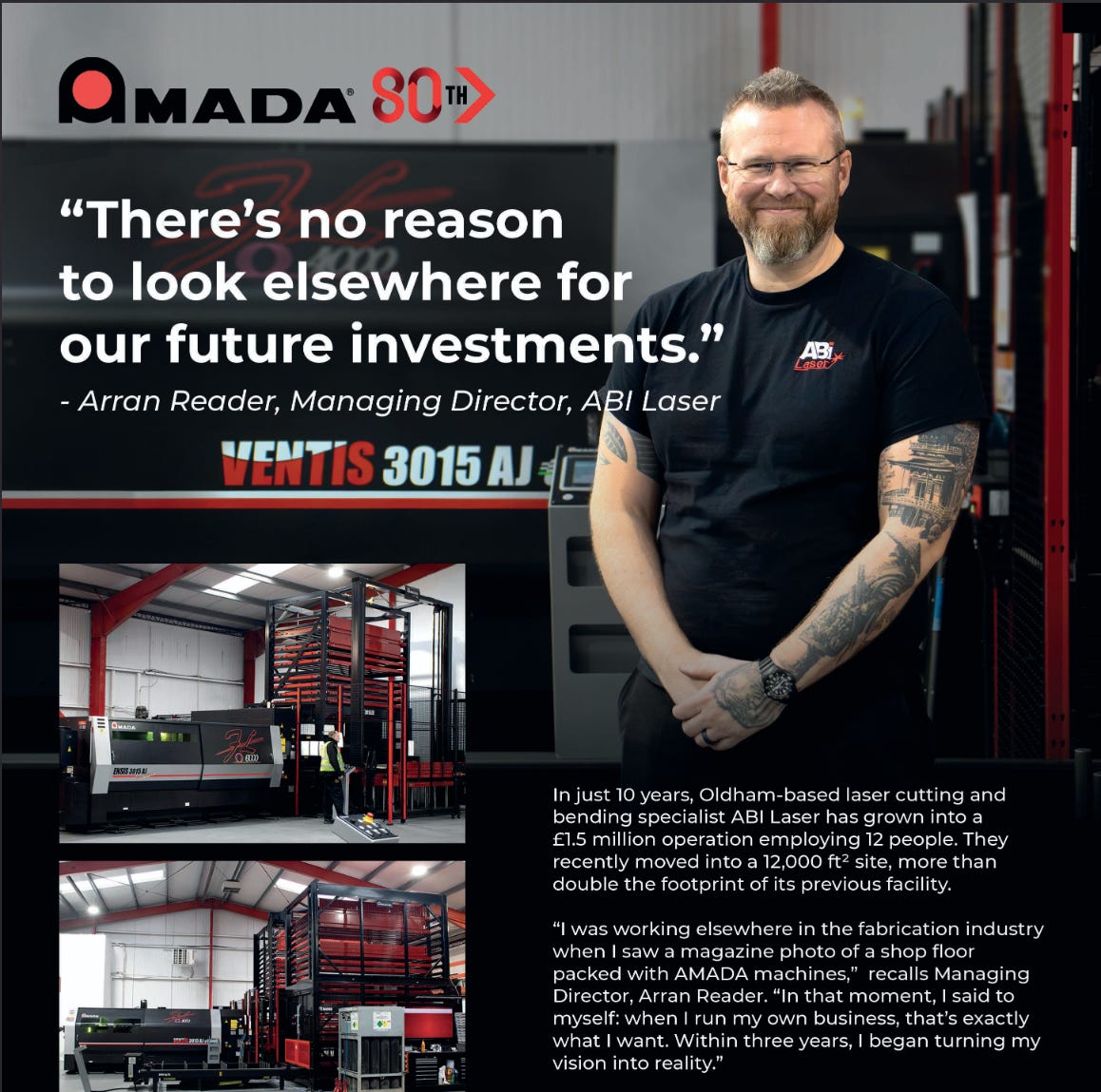
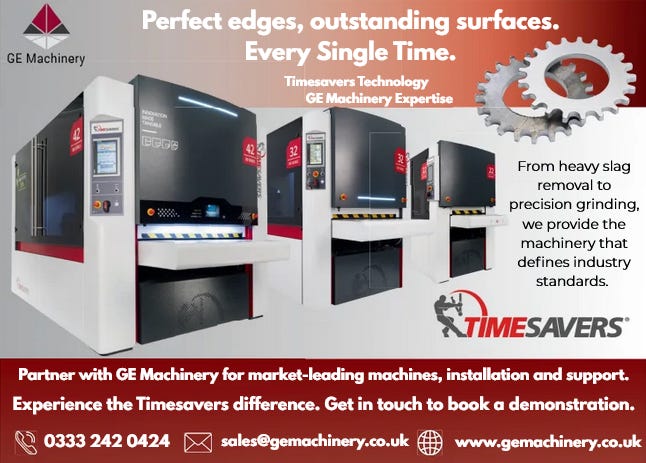
And those marketing materials DON’T change. Manufacturing marketing hasn’t changed in ages. Open PES media and be transported 20-40 years back. And unfortunately not in a sense of seeing wonderfully-crafted print ads from the golden age of Madison Avenue, no, it’s all poorly photoshopped images of machines with an avalanche of data points and press releases that no one reads. Don’t even compare the conferences and exhibitions, which are often the sole driver of business for these companies. Comparing SBC Lisbon to EUROBlech is this:

Industries that boast that they can make anything - from scalpels, to railroad tracks, to EVs, to jewelry, limited only by the laws of physics (for now) and imagination, severely lack creativity when it comes to solving their own problems.
The best manufacturing marketing doesn’t start with the product or a data sheet. It starts with the people who make the product. A company that can attract and keep the best CNC operators, welders, and fabricators produces better work. Better work is easier to market. The employer brand feeds the product brand.
This is the opposite of how most manufacturing marketing is currently structured. The marketing department and the HR department don’t talk to each other unless someone needs a blurry photo of the maintenance team with the client. I mean, what’s wrong with that? Marketing sells the product. HR posts job listings on Indeed. Why should they step on each others’ toes? Draw parallels with Marketing & Product, Marketing & Sales, Marketing & Leadership yourselves, please.
Unless you’re known for being a place that makes great things, a great place to work, and a great to stay long-term - you’re gonna lose talent. Become famous for being great t workers and you get a new generation of better applicants. Better applicants become better operators. Better operators produce better products. Better products earn better margins. Better margins fund better marketing. Sounds like a flywheel, that starts with people.
One of the plants where our client makes fiber-laser machines has an average tenure of 22 years, and has had a 5:1 demand for new apprenticeships since we started. Funnily enough one current apprentice first saw this Jindal Steel ad first and then started paying attention to steel and sheet metal stuff, went on to study and then apprentice, until he saw one of our ads - not even targeted at general public, a strictly B2B ad, and decided to apply. If this was the NBA I’d call him the face of the franchise.
Taking care of your people and let people take care of your comms
This isn’t about running Indeed ads or forcing engineers into awkward 60s interview so they can share a fun fact about themselves. It’s about using the same brand-building discipline you’d apply to customer acquisition and pointing it at everything.
Get a pro filming crew on the shop floor and get them to make something real. Film the dance of sparks and the symphony of tools on metal. Not polished corporate videos, but real footage of operators running machines, explaining what they do, showing what a shift looks like, and how much soul and body goes into building the backbone of the civilization. This content does double duty: it attracts applicants AND it signals manufacturing competence to customers. All you have to do is to get people inspired enough so that a stranger would be ready to go and work in a steel mill.
The disconnected, global nature of a lot of manufacturing companies strips them of local authenticity. If you’re a steel fabricator in Gary, Indiana or a CNC shop in Poznań, your talent pool is geographic. Local fame matters. The same micro-fame concept that makes a brand known within its customer category makes an employer known within its talent market. Principles are the same.
And don’t let my use of word fame get you thinking about Coca Cola or Liquid Death. It doesn’t have to be big or expensive - post a 45-second video of your best welder explaining why this particular joint is tricky. Put $200 behind it targeting skilled tradespeople within 50 km. With a bit of creativity and sincerity, that’s your employer brand campaign.
Writing brief briefs that actually do something
Criticizing is easy, but what do you do about all that?
Regardless if it’s a brief for an agency or an internal job to be done, general managers and leadership and manufacturing companies has to move away from “get more leads” to “make us the company that the best operators in our region want to work for, and the company that customers trust because our people are the best.”
There isn’t a niche or a product within manufacturing and any heavy industry overall that doesn’t have a million ways to stand out for the brands that are ready to move away from this:
Towards a structural change in understanding of communications and how it can solve labor shortage, AI anxiety, improve brand perception, and even raise the next generation of your buyers. The first manufacturing company that solves their workforce problem - by buying better machines, finding and training better operators, and communicating unforgettably, will outproduce and out-deliver the ones that keep optimizing Google Ads while their second shift sits empty.
The steel plant manager who’s losing sleep over staffing and the marketing director who’s chasing leads are working on the same problem, often blindly. If they worked together and risked standing out among the sea of sameness then both recruitment and revenue would be guaranteed for years and years. The company that figures this out first wins both.